
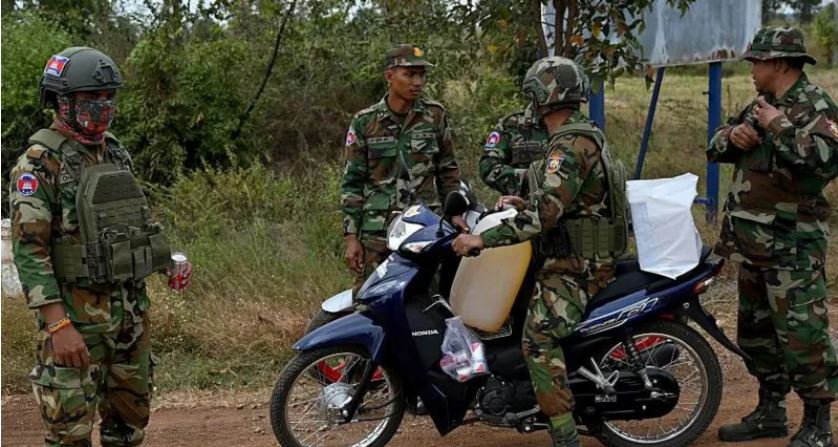
Meta Description: Cambodia closes border crossings with Thailand as fighting escalates despite Trump-brokered ceasefire. Explore casualties, military actions, and the ongoing border dispute.
Focus Keywords: Cambodia Thailand conflict, Cambodia border closure, Thailand Cambodia fighting 2025, Trump ceasefire, Southeast Asia border dispute, Cambodian military news, Thai air strikes
Introduction: Escalating Cambodia-Thailand Conflict
Tensions along the Cambodia-Thailand border escalated further as Cambodia shut all border crossings, citing ongoing fighting despite claims of a ceasefire brokered by US President Donald Trump earlier this week. The announcement, made by Cambodia’s interior ministry, stated that border crossings will remain closed until further notice.
The conflict, which has flared intermittently for decades, recently intensified, resulting in military and civilian casualties on both sides, massive displacement, and renewed international concern.
Recent Developments and Border Closure
The border closure comes after continued military clashes on Saturday, with both sides reporting bombardments and artillery exchanges. Thai officials confirmed four soldiers were killed on Saturday, bringing Thailand’s total military death toll since Monday to 15, with 270 others injured. Additionally, six Thai civilians were reportedly injured.
Cambodia has not released updated casualty figures for its forces, but the conflict has caused at least 11 civilian deaths and 59 injuries on its side, according to the Cambodian government. The escalation has led to over 700,000 people being evacuated across both sides of the border, highlighting the humanitarian impact of the ongoing conflict.
The Role of Trump in the Ceasefire
US President Donald Trump claimed earlier in the week that he could halt the fighting simply by speaking with both prime ministers. After phone conversations with Thai Prime Minister Anutin Charnvirakul and Cambodia’s leadership, Trump announced on social media that both countries had agreed to “cease shooting effective this evening” and adhere to the peace agreement signed in Malaysia in October.
Despite Trump’s announcement, neither Thailand nor Cambodia publicly confirmed an imminent ceasefire. Thai Prime Minister Anutin emphasized that Thailand would not act as the aggressor and demanded evidence that Cambodian forces had withdrawn and removed landmines before any ceasefire could take effect. Meanwhile, Cambodian authorities insisted on continuing military operations to protect national sovereignty.
Details of the Recent Fighting
The most recent clashes included air strikes and rocket barrages affecting multiple provinces:
- Thailand: On December 13, 2025, Thai fighter jets dropped seven bombs on various targets inside Cambodia, according to Cambodia’s defence ministry.
- Cambodia: Rocket attacks continued in response to Thai air strikes, injuring several civilians and causing significant property damage.
The fighting has involved six provinces in north-eastern Thailand and six provinces in Cambodia’s north and north-west, disrupting civilian life and escalating tensions between the neighbouring nations.
Historical Context of the Cambodia-Thailand Border Dispute
The Cambodia-Thailand border spans approximately 800 km and has been contested for over a century. The boundaries were originally drawn by French cartographers in 1907 when Cambodia was a French colony. Over the decades, disagreements over territory and border demarcation have periodically flared into military skirmishes.
The latest escalation followed air strikes and rocket barrages that began on 24 July 2025. Cambodia initiated attacks on Thai positions, prompting retaliatory strikes by Thailand. Both countries have accused each other of being the aggressor, perpetuating a cycle of violence and mistrust.
Ceasefire Attempts and Violations
The Trump-Malaysia brokered ceasefire in October 2025 was intended to bring lasting peace to the border region. The agreement aimed for an immediate and unconditional cessation of hostilities, monitored by international mediators. However, reports of violations have emerged:
- Thailand published evidence of Cambodian troops laying landmines, injuring several Thai soldiers.
- Cambodia claimed that some landmines were remnants from the 1980s civil war, not newly laid.
- Both sides have continued artillery exchanges, complicating efforts to enforce the ceasefire.
Despite these challenges, diplomatic efforts continue, with the international community urging restraint to prevent further civilian casualties and regional destabilization.
Humanitarian Impact of the Conflict
The ongoing conflict has had severe consequences for civilians in the border regions:
- Evacuations: Over 700,000 residents have fled affected areas in Cambodia and Thailand.
- Casualties: Combined military and civilian deaths exceed 26, with hundreds more injured.
- Infrastructure Damage: Bombed hotels, bridges, and residential areas have left many displaced and in urgent need of assistance.
Humanitarian organizations face challenges delivering aid due to active military operations and border closures, heightening the urgency of resolving the conflict.
Political Statements and National Positions
Both countries have maintained firm stances regarding the fighting:
- Thailand: Prime Minister Anutin insists that Cambodia must withdraw forces and clear landmines before agreeing to any ceasefire. Thailand emphasizes that it is not the aggressor and remains committed to defending its territory.
- Cambodia: Cambodian leadership stresses its right to protect national sovereignty, arguing that continued military operations are necessary to ensure territorial security.
This impasse highlights the difficulty of reconciling national security concerns with regional peace agreements.
Role of International Mediation
The conflict has drawn attention from international actors:
- US Involvement: Trump’s intervention via phone calls with both prime ministers and his public statements sought to de-escalate tensions and reaffirm commitments to the Malaysia-brokered ceasefire.
- Regional Cooperation: Malaysian Prime Minister Anwar Ibrahim played a key role in formalizing the October 2025 ceasefire, demonstrating the importance of regional diplomacy.
Despite these efforts, ongoing violations and distrust between the two sides continue to challenge peace initiatives.
Military Strategies and Escalation
The recent escalation demonstrates a pattern of retaliation and escalation:
- Cambodian forces launched rockets into Thailand following a Thai skirmish that injured soldiers.
- Thailand responded with air strikes using F-16 fighter jets, targeting strategic locations in Cambodia.
- Both sides accuse each other of violating ceasefire agreements and deploying residual or new landmines along the border.
This cycle underscores the volatility of the border region and the complexity of enforcing lasting peace.
Long-Term Prospects for Peace
While the ceasefire signed in October 2025 provides a framework for ending hostilities, several obstacles remain:
- Mutual Distrust: Historical grievances and recent ceasefire violations make negotiation challenging.
- Security Concerns: Both nations prioritize protecting military and civilian assets before fully committing to a ceasefire.
- Regional Dynamics: ASEAN countries and international mediators must maintain pressure to ensure compliance and facilitate humanitarian aid.
- Demining and Withdrawal: Effective verification of troop withdrawals and mine clearance is essential to prevent further casualties.
The success of peace initiatives will depend on the political will of both Cambodia and Thailand, supported by ongoing international diplomacy.
Conclusion: Navigating the Cambodia-Thailand Border Crisis
The recent closure of border crossings by Cambodia and ongoing fighting with Thailand highlight the fragility of peace in the region. Despite Trump-brokered ceasefire agreements and international mediation, hostilities continue, with significant human and material costs.
Resolving the long-standing border dispute will require:
- Commitment to ceasefire agreements
- Transparent verification of troop withdrawals
- Removal of landmines and other hazards
- Continued international oversight and mediation
The ongoing crisis underscores the challenges of balancing national security, sovereignty, and regional stability. As Southeast Asia watches closely, the next steps taken by Cambodia, Thailand, and international mediators will determine whether the region can move toward lasting peace or face prolonged instability.