
Meta Description: Israel kills senior Hamas commander Raed Saad in a Gaza strike. Explore the details of the attack, casualties, Trump’s peace plan, and the ongoing Gaza-Israel conflict.
Focus Keywords: Israel Gaza strike, Raed Saad killed, Hamas military wing, Gaza conflict 2025, Trump peace plan Gaza, Israeli military news, Qassam Brigades
Israel Targets Senior Hamas Official in Gaza
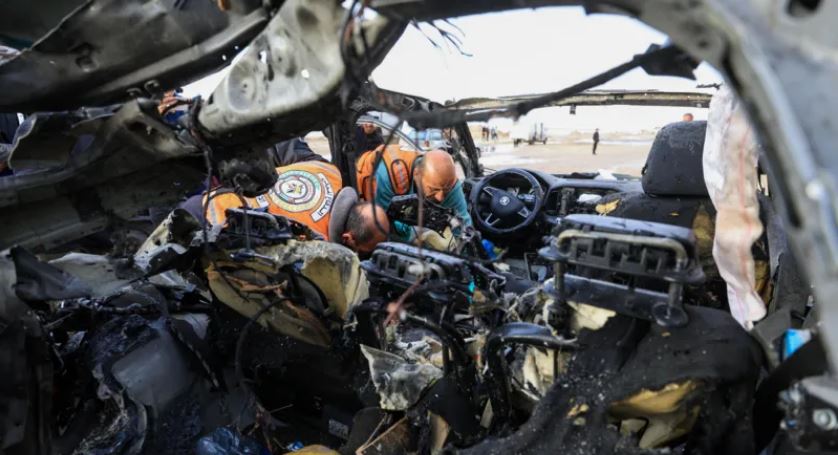
Israel announced on Saturday that it successfully killed Raed Saad, a senior Hamas commander, in a targeted strike on a vehicle in Gaza City. Saad, the head of weapons production for Hamas’s military wing, the Qassam Brigades, has long been considered one of Israel’s most wanted figures, responsible for orchestrating attacks on Israeli communities and soldiers over the past two decades.
In a joint statement, the Israeli Defense Forces (IDF) and the Israeli Security Agency (Shin Bet) confirmed the elimination of Saad, who had led several brigades during the Hamas attacks on 7 October 2023, one of the deadliest attacks in recent history.
Details of the Gaza Strike
According to Hamas sources, four people were killed in the strike, including Saad’s aide and lower-ranking official Abu Imad al-Laban. Multiple passers-by were also reportedly injured. Israeli forces stated that Saad was responsible for the deaths of numerous Israeli soldiers through the use of explosive devices and had been targeted in previous assassination attempts, including a March 2024 operation in Gaza City, where he narrowly escaped capture.
The strike occurred on the Palestinian-controlled side of the so-called Yellow Line, which divides Gaza following a fragile US-led ceasefire in October 2025. Israeli forces control the area to the east of the line, which encompasses just over half of the Gaza Strip.
Raed Saad: A Profile
Raed Saad is widely regarded as one of the most prominent figures within Hamas’s Qassam Brigades, responsible for weapons production and orchestrating attacks against Israeli military and civilian targets. Since the 7 October 2023 attacks, in which over 1,200 Israelis were killed and more than 250 taken hostage, Saad’s leadership role has drawn increased scrutiny.
He has long evaded Israeli capture, with operations spanning decades aimed at neutralizing his influence. The strike on Saturday marks a significant development in Israel’s ongoing efforts to dismantle Hamas’s military hierarchy.
Casualties and Impact
The Hamas-run Civil Defence spokesman Mahmoud Basal reported four deaths, while the IDF emphasized Saad’s role in numerous attacks. The strike has raised tensions further in Gaza, where Hamas’s leadership maintains strong influence over military and civilian affairs.
Israel’s strategy has increasingly focused on targeted strikes against high-profile Hamas operatives to limit the group’s operational capabilities and reduce threats to Israeli civilians. Saad’s elimination represents a critical blow to Hamas’s weapons production and command structure.
Background: The 7 October 2023 Attacks
The attack in which Saad played a key role occurred on 7 October 2023, when Hamas launched a large-scale assault on Israeli communities east of Gaza City. This attack resulted in the deaths of approximately 1,200 people, with over 250 hostages taken, most of whom have since been returned, except for the remains of Israeli police officer Ran Gvili.
The incident prompted international attention and set the stage for renewed peace efforts in the region, including Trump’s 20-point plan for Gaza and Israel.
Trump’s Peace Plan: Phases and Proposals
President Donald Trump’s peace plan envisions a multi-stage strategy for Gaza, focusing on:
- Return of Hostages: Ensuring all hostages taken during the 2023 attacks are returned.
- Disarmament of Hamas: Reducing the militant capabilities of Hamas as part of de-radicalization efforts.
- Transitional Governance: Establishing a technocratic, apolitical Palestinian committee to temporarily oversee Gaza.
- International Stabilization Force: Deploying security forces under international supervision to maintain peace and order.
- Long-Term Palestinian Authority Control: Returning governance to a reformed Palestinian Authority after conditions for stability are met.
The plan remains controversial in Israel, with Prime Minister Benjamin Netanyahu expressing skepticism regarding Palestinian statehood and transitional governance proposals.
Regional Security and the Yellow Line
The strike on Saad’s vehicle highlights the continued divisions within Gaza, marked by the Yellow Line separating Palestinian and Israeli-controlled zones. While the ceasefire implemented in October 2025 has reduced open conflict, targeted operations like this strike emphasize the fragility of the situation.
Israel maintains strict security protocols in eastern Gaza, aiming to prevent further attacks and protect civilians. Meanwhile, Hamas continues to exert influence in the Palestinian-controlled areas, complicating efforts toward lasting peace.
The Role of Hamas Leadership
Saad was a member of the newly formed five-member Hamas military leadership council, established post-ceasefire. His elimination disrupts the council’s command structure and raises questions about Hamas’s ability to coordinate future operations.
Israel’s ongoing efforts to neutralize key operatives demonstrate its reliance on intelligence-driven targeted strikes, rather than broader military campaigns, in reducing the threat posed by Hamas.
Casualties and Humanitarian Impact
Beyond Hamas operatives, the strike reportedly injured several civilians in Gaza, highlighting the humanitarian challenges in densely populated areas. The Gaza health ministry, run by Hamas, estimates that over 70,000 Palestinians have died due to ongoing Israeli military actions since October 2023.
These figures underscore the need for effective ceasefire agreements and international mediation to prevent further loss of life while addressing security concerns.
International Diplomacy and Trump’s Role
Trump’s peace plan positions the United States as the primary mediator in Gaza, proposing oversight through a Board of Peace chaired by the US President. The strategy emphasizes gradual disarmament, governance reform, and stabilization, with a long-term goal of Palestinian self-determination.
Trump is scheduled to meet Netanyahu on 29 December to discuss the next stages of the peace plan. The meeting will likely focus on security arrangements, transitional governance, and pathways toward Palestinian autonomy, while addressing Israeli concerns about territorial integrity and militant threats.
Challenges Ahead
Several factors complicate the implementation of Trump’s plan:
- Internal Israeli Politics: Netanyahu’s opposition to a Palestinian state may hinder full acceptance.
- Hamas Resilience: Despite Saad’s death, Hamas remains an entrenched organization with deep community support in Gaza.
- Regional Stability: Ensuring a peaceful transition requires cooperation from neighboring countries and international stakeholders.
- Security Force Coordination: The composition and mandate of the International Stabilization Force remain unclear, raising questions about enforcement and accountability.
Conclusion: Toward a Path of Peace
The targeted strike on Raed Saad represents a critical step in Israel’s efforts to neutralize high-level threats, while also serving as a reminder of the fragile security situation in Gaza.
Trump’s peace plan, though ambitious, faces significant hurdles, including political resistance, ongoing militant activity, and the need for multilateral cooperation. The coming months will determine whether these efforts can establish a credible pathway to stability, de-radicalization, and eventual Palestinian self-determination.
As the international community watches, the balance between military action and diplomatic initiatives will shape the future of Gaza and the broader Middle East for years to come.